Women lose weight best with small, steady changes they can keep. Eat smaller portions of balanced home food with protein at every meal, strength train 2 to 3 times a week, move every day in a way you enjoy, and sleep 7 or more hours. A safe pace is about 0.5 kg a week, so 10 kg usually takes 4 to 6 months. Crash diets work for a few weeks; habits work for years.
How weight loss really works
You lose weight when your body uses more energy than you eat over weeks and months. Food has the bigger effect on that balance; exercise has a smaller direct effect on the scale but protects your muscle, improves your health and helps you keep the weight off. In a review of weight-loss trials with at least a year of follow-up, people who changed their diet lost an average of 5 to 8.5 kg in the first 6 months, while advice alone or exercise alone led to little weight loss.
The good news: you don’t need a special diet. A review of 48 trials comparing popular diets, including low-carb and low-fat plans, found that the differences between them were small, and the authors concluded that the best diet is the one a person will stick to. For most Indian women, that is the food already cooked at home, in the right portions.
How fast is safe?
The ICMR-NIN dietary guidelines describe gradual weight loss of about 0.5 kg a week as safe, and advise that weight-loss diets should not go below 1,000 kcal a day. The NHS suggests aiming for 0.5 to 1 kg a week and advises not to lose weight suddenly with diets.
| Goal | At 0.5 kg a week | At 1 kg a week |
|---|---|---|
| 5 kg | about 10 weeks | about 5 weeks |
| 10 kg | about 5 months | about 10 weeks |
| 15 kg | about 7 months | about 4 months |
Weight loss is rarely a straight line: the first weeks are often faster (partly water), and it usually slows after a few months. Our plateau guide explains why, and what to change.
A realistic first goal
Aim to lose 5% of your body weight first: 3.5 kg if you weigh 70 kg, 4 kg at 80 kg. The American College of Sports Medicine notes that health risks begin to fall with a 3 to 5% loss. Then set the next 5%. To know where you are starting, check your BMI and waist with the lower cut-offs for Asian women in our BMI and waist guide.
The plan, step by step
1. Keep your home food, change the portions
Fill half your plate with vegetables (sabzi and salad), a quarter with protein (dal, rajma, chana, paneer, curd, eggs, chicken or fish) and a quarter with roti or rice. Cut back on fried snacks, sweets, sugary tea and packaged food, rather than whole food groups. Our Indian diet for weight loss shows the plate, the portions and a sample day.
2. Protein at every meal
ICMR-NIN recommends 0.83 g of protein per kg of body weight a day for healthy adults, about 50 g for a 60 kg woman. Protein with every meal helps you protect muscle while you lose weight. Vegetarian? See our protein guide.
3. Strength train 2 to 3 times a week
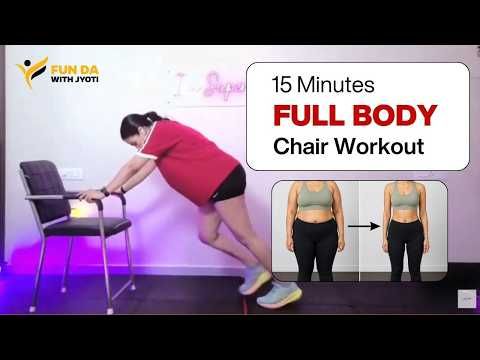
When you eat less, your body can lose muscle as well as fat. A review of weight-loss research found that exercise helps preserve muscle while you lose weight, and that resistance exercise also improves strength. At home: squats, wall or chair push-ups, rows with water bottles, lunges and glute bridges. Start with our 4-week beginner plan or the 15-minute chair workout.
4. Move every day, in a way you enjoy
WHO recommends 150 to 300 minutes of moderate activity a week. Choose something you look forward to: dance cardio, brisk walking, cycling or a class with friends. Short sessions count. Busy? See our plans for busy mothers and working women.
5. Sleep 7 or more hours
Sleep medicine experts recommend at least 7 hours a night for adults. When you are tired, both workouts and good food choices are harder. Our sleep guide has a simple wind-down routine.
6. Keep a simple record
A review of studies on self-monitoring found that tracking diet, activity or weight was consistently linked with more weight loss. You don’t need an app: a notebook with your meals, steps and weekly weight or waist is enough.
7. Plan for the long run
In weight-loss trials that followed people for up to 4 years, some weight came back, but on average people kept 3 to 6 kg off. The habits that got the weight off are the ones that keep it off, so choose habits you are happy to keep. If you keep starting and stopping, read our guide to breaking the Restart Cycle.
Common weight-loss mistakes women make
- Crash diets and skipping meals: the NHS advises against both. You lose muscle, feel exhausted and usually overeat later.
- Only cardio, no strength: you lose muscle along with fat, and your shape changes less than you hoped.
- Hundreds of crunches for the belly: in a trial, 6 weeks of tummy exercises alone did not reduce belly fat. Fat comes off the whole body, so see our belly fat guide for what works.
- Cutting out roti or rice completely: hard to keep up in an Indian home. Smaller portions work better than banning foods.
- “Healthy” drinks and snacks: sweetened juices, packaged “diet” snacks and sugary chai add up quickly.
- Judging by the scale alone: weight goes up and down day to day with water. Track your waist and how clothes fit too.
- All or nothing: one samosa or a missed workout doesn’t undo a week. Carry on at the next meal.
- Eating your feelings: if stress or boredom drives your snacking, our emotional eating guide can help.
Your life stage matters
- After pregnancy: wait for your doctor’s go-ahead and start gently. See our postpartum and C-section guides.
- In your 40s and 50s: muscle loss and menopause change where fat goes. See weight loss after 40.
- With PCOS or thyroid problems: weight loss is possible alongside your doctor’s treatment. See our PCOS and thyroid guides.
When to see a doctor
- You are gaining weight without a clear reason, or feel unusually tired, cold or low. An underactive thyroid can cause weight gain and tiredness, and a blood test can check.
- Your periods are irregular, or you have excess hair growth or acne.
- You have a health condition, take regular medicines, or haven’t exercised in a long time, before starting a new programme. Never stop or change a medicine without your doctor.
- You are losing weight without trying.
- Eating feels out of control, or you make yourself sick or skip meals to control your weight. Please talk to a doctor or call Tele-MANAS on 14416.
Real women, real numbers
Dr. Jyoti Srivastava went from 75 kg to 52 kg at home after the birth of her daughter, and has kept it off. FunDa members have shared their own results, with photos and numbers, on our Real Transformations page, grouped by goal. Results vary, and they come from months of consistency, not quick fixes.
Train along with Dr. Jyoti
Two free follow-along workouts you can start today at home: a chair workout and a stick workout.
Sources
- NHS. Tips to help you lose weight (reviewed 17 March 2023).
- ICMR-National Institute of Nutrition. Dietary Guidelines for Indians (2024).
- Johnston BC et al. Comparison of weight loss among named diet programs in overweight and obese adults: a meta-analysis. JAMA. 2014;312(9):923-933.
- Franz MJ et al. Weight-loss outcomes: a systematic review and meta-analysis of weight-loss clinical trials with a minimum 1-year follow-up. J Am Diet Assoc. 2007;107(10):1755-67.
- Donnelly JE et al. American College of Sports Medicine position stand. Appropriate physical activity intervention strategies for weight loss and prevention of weight regain for adults. Med Sci Sports Exerc. 2009;41(2):459-71.
- Cava E, Yeat NC, Mittendorfer B. Preserving healthy muscle during weight loss. Adv Nutr. 2017;8(3):511-519.
- Bull FC et al. World Health Organization 2020 guidelines on physical activity and sedentary behaviour. Br J Sports Med. 2020.
- Burke LE, Wang J, Sevick MA. Self-monitoring in weight loss: a systematic review of the literature. J Am Diet Assoc. 2011;111(1):92-102.
- Vispute SS et al. The effect of abdominal exercise on abdominal fat. J Strength Cond Res. 2011;25(9):2559-64.
- Kostek MA et al. Subcutaneous fat alterations resulting from an upper-body resistance training program. Med Sci Sports Exerc. 2007;39(7):1177-85.
- Watson NF et al. Recommended amount of sleep for a healthy adult: a joint consensus statement of the American Academy of Sleep Medicine and Sleep Research Society. Sleep. 2015;38(6):843-4.
- WHO Expert Consultation. Appropriate body-mass index for Asian populations and its implications for policy and intervention strategies. Lancet. 2004;363(9403):157-63.
- NHS. Underactive thyroid (hypothyroidism) (reviewed 28 April 2025).
- Press Information Bureau, Government of India. Tele-MANAS (Tele Mental Health Assistance and Networking Across States) launched.
How we write our guides: read our editorial and evidence policy.