You can lose weight after 40, but the approach has to change. Your metabolism stays largely stable until about 60. What changes is your body composition: you lose muscle unless you train it, and around menopause fat builds up faster, especially around the middle. So weight loss after 40 works best when it protects muscle: strength training 2 to 3 times a week, protein at every meal, daily movement, enough sleep and balanced home food, without crash diets.
What really changes after 40
1. Your metabolism, much less than you think
A 2021 study in Science measured the daily energy use of thousands of people aged from 8 days to 95 years. Once body size and muscle were accounted for, metabolism stayed stable from about age 20 to 60 and declined only after 60. Read more in our metabolism guide.
2. Your muscle, unless you use it
Inactive adults lose about 3 to 8% of their muscle per decade. Less muscle means you burn a little less energy, feel weaker and find daily activity harder, so you move less. Strength training is how you keep it, and our strength training guide for women over 40 shows eight safe home moves.
3. Fat around menopause
The SWAN study followed women through menopause with body scans. At the start of the menopause transition, the rate of fat gain doubled and lean mass began to fall, continuing until about 2 years after the final period. The scale didn’t always show it, because muscle was being replaced by fat. Another study found that fat deep in the abdomen increased in women who became postmenopausal, and that physical activity dropped about 2 years before menopause. This is why the waist often grows in your 40s even when your weight barely changes. See our perimenopause and menopause guides.
4. Your life
Children’s exams, ageing parents, work, broken sleep from night sweats, and stress all eat into the time and energy you have for yourself. These are real reasons, and the plan below is built around them.
The plan that works after 40
1. Strength train 2 to 3 times a week
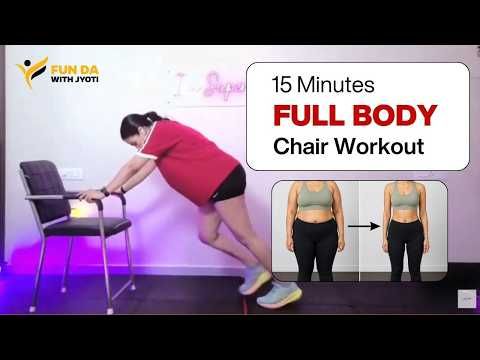
WHO recommends muscle-strengthening activities for all major muscle groups on at least 2 days a week. A review of weight-loss research found that exercise helps preserve muscle while you lose weight, and that resistance exercise also improves strength. At home, use your body weight, a chair and filled water bottles: squats, wall or chair push-ups, rows, lunges and glute bridges. Start with our 15-minute chair workout.
2. Protein at every meal
ICMR-NIN recommends 0.83 g of protein per kg of body weight a day, about 50 g for a 60 kg woman. Spread it through the day: dal or sambar, paneer, curd, eggs, chicken or fish, soya, chana or sprouts. Adequate protein (not excessive) with exercise helps protect muscle during weight loss. Vegetarian? Our protein guide shows how to get enough from home food.
3. No crash diets
Weight lost by dieting alone includes muscle as well as fat, which is the opposite of what you need after 40. Instead, keep your roti, dal and sabzi and adjust portions: half the plate vegetables, a quarter protein, a quarter roti or rice. Our Indian diet for weight loss explains how.
4. Move every day, in a way you enjoy
Build towards WHO’s 150 to 300 minutes of moderate activity a week. Dance cardio, brisk walks and climbing stairs all count, and short sessions add up. Try our 30-minute dance workout, or the 15-minute plan for busy days.
5. Protect your sleep
Adults need 7 or more hours of sleep a night, according to sleep medicine experts. When you are tired, it is harder to exercise and to plan meals. If night sweats or worry wake you up, our sleep guide has a simple routine, and your doctor can help with menopause symptoms.
6. Track your waist, not just the scale
Because muscle can be replaced by fat without much change in weight, measure your waist every 2 to 4 weeks and keep it under half your height. Our BMI and waist guide for Indian women has a chart by height.
7. Set a realistic first goal
Aim to lose 5% of your body weight first, about 3.5 kg for a 70 kg woman. The American College of Sports Medicine notes that health risks begin to fall with a 3 to 5% loss. Then keep going at a pace you can live with.
A realistic week
- Monday and Thursday: 30 minutes of strength training (chair, bottles, body weight), plus a 10-minute walk.
- Tuesday and Friday: 30 minutes of dance cardio.
- Wednesday: a short strength session (15 minutes) and stretching.
- Saturday: a longer walk or a family activity, plus 10 minutes of mobility.
- Sunday: rest, or a gentle walk.
Every day: protein in each meal, vegetables at lunch and dinner, water through the day, and lights out at a regular time. In week 1, do what you can; add a little each week.
When to see a doctor
- You are gaining weight without a clear reason, or feel unusually tired, cold or low. An underactive thyroid, for example, can cause weight gain and tiredness, and is easy to test for.
- Your periods are very heavy, very frequent, or have returned after stopping.
- Menopause symptoms such as hot flushes, night sweats or low mood are affecting your life; treatment options can help.
- You have heart, blood pressure, joint or bone problems, or haven’t exercised for a long time, before starting a new programme.
- You take medicines and are unsure whether they affect your weight. Never stop or change a medicine without your doctor.
Real women in their 40s
Many FunDa members start in their 40s and 50s. Read Bhavna’s story: a working mother of three in her 40s who now eats three full meals a day and danced on stage at her office party. Results vary, and they come from months of consistency, not quick fixes.
See real results from women in their 40s and beyond, with photos and numbers as they shared them.
Train along with Dr. Jyoti
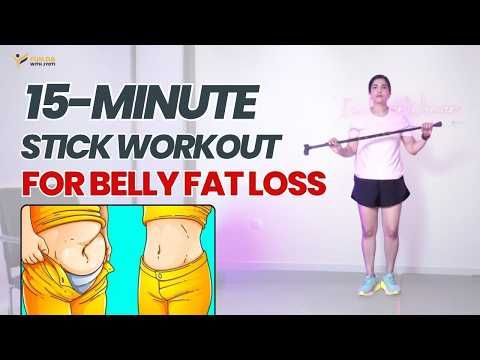
Dr. Jyoti’s free follow-along workouts below use a chair and a stick, so you can start today.
Sources
- Pontzer H et al. Daily energy expenditure through the human life course. Science. 2021;373(6556):808-812.
- Westcott WL. Resistance training is medicine: effects of strength training on health. Curr Sports Med Rep. 2012;11(4):209-16.
- Greendale GA et al. Changes in body composition and weight during the menopause transition. JCI Insight. 2019;4(5):e124865.
- Lovejoy JC et al. Increased visceral fat and decreased energy expenditure during the menopausal transition. Int J Obes (Lond). 2008;32(6):949-58.
- Cava E, Yeat NC, Mittendorfer B. Preserving healthy muscle during weight loss. Adv Nutr. 2017;8(3):511-519.
- Bull FC et al. World Health Organization 2020 guidelines on physical activity and sedentary behaviour. Br J Sports Med. 2020.
- ICMR-National Institute of Nutrition. Dietary Guidelines for Indians (2024).
- Watson NF et al. Recommended amount of sleep for a healthy adult: a joint consensus statement of the American Academy of Sleep Medicine and Sleep Research Society. Sleep. 2015;38(6):843-4.
- Donnelly JE et al. American College of Sports Medicine position stand. Appropriate physical activity intervention strategies for weight loss and prevention of weight regain for adults. Med Sci Sports Exerc. 2009;41(2):459-71.
- NHS. Menopause and perimenopause: symptoms (reviewed 19 May 2026).
- NHS. Underactive thyroid (hypothyroidism) (reviewed 28 April 2025).
How we write our guides: read our editorial and evidence policy.