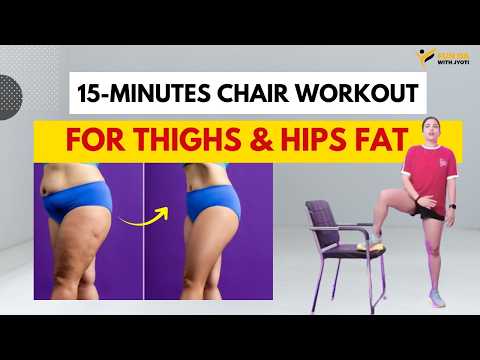
After 40, strength training is the single most useful kind of exercise most women aren’t doing. It protects the muscle you naturally lose with age, supports your bones through menopause, and makes everyday life easier. Two or three short sessions a week at home, with a chair, water bottles and your own body weight, are enough to start.
Why strength matters more after 40
You lose muscle unless you use it
A review in Current Sports Medicine Reports notes that inactive adults lose about 3 to 8% of their muscle mass per decade, along with a drop in resting metabolic rate and a build-up of fat. The same review found that 10 weeks of resistance training could increase lean weight by about 1.4 kg and reduce fat by about 1.8 kg. Our guide to metabolism after 35 explains why muscle matters more than your “metabolism”.
Your bones need it, especially around menopause
WHO notes that loss of bone density at menopause is a major reason for higher rates of osteoporosis and fractures. A 2023 systematic review and meta-analysis of 80 studies with more than 5,500 women found that exercise improved bone mineral density in the spine and hips of women after menopause. Encouragingly, the effects were similar whether or not the exercise was supervised.
It helps far beyond the mirror
The same 2012 review links resistance training with better physical function and walking speed, improved insulin sensitivity, lower resting blood pressure and less low back pain. If blood sugar is a worry, read our insulin resistance guide.
How much do you need?
WHO recommends that all adults do muscle-strengthening activities that work all the major muscle groups on at least 2 days a week, alongside 150 to 300 minutes of moderate aerobic activity, such as brisk walking or dancing. For adults over 65, WHO adds balance and strength activities on 3 or more days a week to help prevent falls. The NHS lists the major muscle groups as legs, hips, back, abdomen, chest, shoulders and arms.
What counts as strength training at home
- Your own body weight: sit-to-stands, push-ups against a wall or counter, bridges.
- Water bottles: start with 1-litre bottles filled with water, then fill them with sand for more load.
- A resistance band, which is cheap and easy to store.
- A sturdy chair, a step and a dupatta for support, balance and resistance.
- Yoga and pilates, which the NHS counts as strengthening, though it is harder to keep adding load.
Eight moves for women over 40
Move slowly and with control. Breathe out on the effort and never hold your breath, which raises blood pressure. Stop any move that causes sharp pain.
1. Chair squat (thighs and hips)
Stand in front of a chair, feet hip-width apart. Sit back until you lightly touch the seat, then stand up through your heels. Use a higher chair if your knees complain.
2. Counter push-up (chest, shoulders, arms)
Hands on the kitchen counter, body in a straight line. Lower your chest towards the counter, then push away. Move to a lower surface as you get stronger.
3. Bottle row (upper back and posture)
One hand and knee on a chair, a bottle in the other hand. Pull the bottle up towards your waist, squeezing your shoulder blade back, then lower slowly. This counters hours of bending over the stove and phone.
4. Glute bridge (hips and lower back)
Lie on your back, knees bent. Lift your hips until your body is straight from shoulders to knees, squeeze, and lower slowly.
5. Step-up (legs and balance)
Using the bottom stair and holding the railing, step up with one foot, bring the other up, and step down. Change the leading leg halfway.
6. Bottle shoulder press (shoulders and arms)
Sitting tall, press two bottles from shoulder height to overhead without arching your back, then lower slowly.
7. Calf raise at the counter (ankles and balance)
Holding the counter lightly, rise onto your toes, pause, and lower slowly. As balance improves, use just one fingertip for support.
8. Wall plank (core)
Forearms on a wall, step your feet back until your body is at a slant, and hold for 15 to 30 seconds while breathing normally. If your tummy domes along the middle, or you have leaking, start with our deep core exercises instead.
Sets, reps and a simple weekly plan
A common starting point is 1 to 2 sets of 10 to 12 repetitions of each move, with the last two or three repetitions feeling like real effort. Rest a minute between sets.
- Monday: the eight moves (about 25 minutes).
- Tuesday: 30 minutes of brisk walking or dance.
- Wednesday: stretching or yoga, and a walk.
- Thursday: the eight moves.
- Friday and Saturday: 30 minutes of walking or dance cardio.
- Sunday: rest or a gentle walk with the family.
New to exercise altogether? Start with our 4-week beginner plan and come back to this routine after it.
How to keep getting stronger
Muscles adapt, so the work has to grow with you. Every week or two, change one thing:
- Add 2 repetitions, or a second or third set.
- Slow down: take three seconds to lower.
- Use heavier bottles (sand instead of water) or a firmer band.
- Use a lower chair, a lower counter, or a higher step.
Eat to support your muscles
Muscle needs protein. Include dal, chana, rajma, paneer, curd, milk, eggs, fish or chicken at every meal. The ICMR-NIN Dietary Guidelines for Indians note that good muscle mass helps keep bones strong and joints protected, and that protein supplements taken on top of a balanced diet don’t build more muscle. Our Indian diet guide shows a balanced plate.
Safety: when to check with a professional first
- You haven’t exercised for a long time, or you have heart disease, high blood pressure or diabetes.
- You have osteoporosis or have had a fracture: ask your doctor or a physiotherapist which moves suit you.
- You have joint pain, a recent injury or surgery.
- You leak urine when you exercise, or your tummy domes when you lift your head: work on your pelvic floor and deep core first.
- Stop and get help straight away for chest pain, dizziness or unusual breathlessness.
Strength training through perimenopause and menopause
The years around menopause are when strength work pays off most. Read our perimenopause guide for the first signs and what helps, and our menopause fitness guide for life after your periods stop.
How FunDa helps women over 40
In the Superwoman Club, Dr. Jyoti leads live upper body and lower body sessions every week, using a chair, a dupatta, a stick and water bottles, so women build strength at home with someone checking their form. The Upper Body and Lower Body transformation programs are part of every Club plan, with nutrition built around your kitchen and a community of women your age. Results vary from person to person.
Sources
- Bull FC et al. World Health Organization 2020 guidelines on physical activity and sedentary behaviour. Br J Sports Med. 2020.
- NHS. Physical activity guidelines for adults aged 19 to 64 (reviewed 22 May 2024).
- Westcott WL. Resistance training is medicine: effects of strength training on health. Curr Sports Med Rep. 2012;11(4):209-16.
- Mohebbi R et al. Exercise training and bone mineral density in postmenopausal women: an updated systematic review and meta-analysis. Osteoporos Int. 2023;34(7):1145-1178.
- ICMR-National Institute of Nutrition. Dietary Guidelines for Indians (2024).
How we write our guides: read our editorial and evidence policy.