Working women can stay fit with a desk job by combining a fixed workout slot with more movement during the day. Choose one time you can protect (before work, at lunch or after office) for 20 to 30 minutes of strength or dance, break up sitting every 30 minutes, take the stairs, and walk after lunch. Plan your food ahead with a home-cooked tiffin, and protect your sleep. Research shows enough daily activity can offset much of the health risk of long sitting.
Why a desk job makes fitness harder
- Long sitting: 8 or more hours at a desk, plus the commute and screen time in the evening.
- No time left: office hours, travel and housework leave little time for yourself. In research with working parents, time, family responsibilities and guilt were among the main barriers to exercise.
- Office food: birthday cakes, samosas with the 4 pm chai, and skipped lunches followed by evening hunger.
- Stress and tiredness: after a long day, a workout can feel like one more job.
It is common in India. In the ICMR-INDIAB survey of over 14,000 adults, more than half were inactive, people in cities were more inactive than those in villages (65% vs 50%), women were less active than men, and fewer than 1 in 10 did any exercise or sport in their free time.
What sitting all day really does
A 2016 analysis in The Lancet pooled data from over 1 million adults. People who sat a lot and were inactive had the highest risk of dying during the studies. But those who sat for more than 8 hours a day and were also very active, at about 60 to 75 minutes of moderate activity a day, had no higher risk than people who sat the least. Smaller amounts of activity were linked with a smaller rise in risk than being inactive.
How you sit matters too. A review of trials that broke up long periods of sitting with short, light walks found that blood sugar and insulin after meals were lower than when people stayed seated. So a desk job needs two things: a proper workout, and fewer long, unbroken hours in the chair.
Fit exercise around your workday
Pick the slot that suits your life, put it in your calendar, and treat it like a meeting.
Option 1: before work
20 to 30 minutes at home before getting ready. Mornings are the least likely to be taken over by late meetings or traffic. Keep your workout clothes ready the night before.
Option 2: the lunch break
A 15 to 20 minute brisk walk after eating, or a short strength session if you work from home. Even a 10-minute walk after lunch breaks up the longest sitting stretch of the day.
Option 3: after office
A dance or strength session when you get home, before dinner. Evening exercise generally doesn’t harm sleep: a review of 23 studies found no overall negative effect, though vigorous exercise ending within about an hour of bedtime may delay sleep. Change into workout clothes as soon as you get home, before you sit down.
Short sessions count. A review of the evidence found health benefits from activity of any length, not only from bouts of 10 minutes or more, so on a heavy day, 10 minutes is far better than skipping.
Move more during the workday
- Stand up every 30 minutes for a minute or two: refill your water, walk to a colleague instead of messaging, or stand for phone calls. In one workplace trial, short breaks of 1 to 2 minutes every half hour reduced sitting by about 40 minutes a day compared with two longer breaks.
- Take the stairs. In a small trial, sedentary young adults who climbed 3 flights (60 steps) briskly, 3 times a day on 3 days a week, improved their fitness after 6 weeks, although the gain was modest.
- Add short, brisk bursts. In a UK study of about 25,000 adults who didn’t exercise (average age 62), those who did about three 1 to 2 minute bursts of vigorous everyday activity a day, such as climbing stairs fast or walking very briskly, had a lower risk of death over about 7 years. It shows a link, not proof, but it suggests short bursts are worth it.
- Walk on calls that don’t need a screen, and walk after lunch.
- Sit-stand desk? A Cochrane review found they cut sitting at work by about 100 minutes a day at first (low-quality evidence). Alternate sitting and standing; standing still all day is not the goal.
A 5-minute desk routine
Do this once or twice during the workday. Move gently, and stop if anything hurts.
- Neck tilts (30 seconds): sit tall, slowly bring your ear towards your shoulder, hold for a few breaths, then switch sides.
- Shoulder rolls (30 seconds): roll your shoulders up, back and down, 10 times.
- Chest opener (30 seconds): clasp your hands behind your back or hold the chair back, lift your chest and breathe.
- Seated twist (1 minute): sit tall, turn gently to one side holding the chair, hold, then switch.
- Seated hip stretch (1 minute): rest one ankle on the opposite knee and lean forward slightly with a straight back, then switch. Skip it if it strains your knee.
- Wrist and finger stretches (30 seconds): gently stretch each wrist forward and back, then open and close your hands.
- Standing calf raises (1 minute): stand holding the desk and rise onto your toes 15 to 20 times.
Stiff neck from the desk? The NHS lists bad posture, such as sitting at a desk for a long time, as a common cause of neck pain, and advises not keeping your neck in the same position for long. Sit upright, roll your shoulders back gently, and raise your screen to eye level if you can.
A realistic week for working women
- Monday and Thursday: 20 to 30 minutes of strength at home (squats, wall or chair push-ups, rows with water bottles, lunges, glute bridges).
- Tuesday and Friday: 30 minutes of dance cardio before or after work.
- Wednesday: a 30-minute brisk walk, or two 15-minute walks.
- Saturday: a longer walk or a family activity, plus 10 minutes of stretching.
- Sunday: rest, plan your week’s workout slots and tiffins.
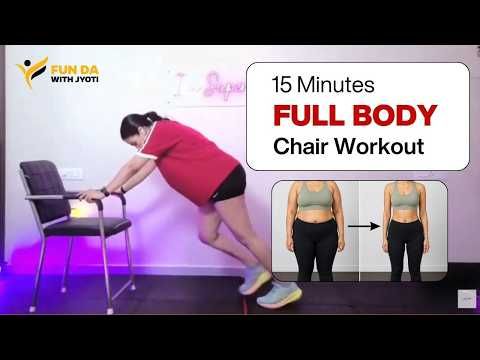
Every workday: stand up every 30 minutes, take the stairs, walk after lunch and do the desk routine once. Over time, build towards WHO’s 150 to 300 minutes of moderate activity a week, with strength work on at least 2 days. Our 15-minute chair workout and 30-minute dance workout fit these slots.
Office food, made easier
- Carry a home tiffin: dal or rajma, sabzi, roti or rice, curd and salad. Half the box vegetables, a quarter protein, a quarter roti or rice.
- Plan the 4 pm snack: roasted chana, a fruit, sprouts, buttermilk or a handful of nuts, so you are not hungry enough for samosas.
- Tea and coffee: notice how many cups and how much sugar; cut down gradually.
- Office celebrations: enjoy a small piece, without guilt; one slice doesn’t decide your results, your usual days do.
- Water: keep a bottle on your desk; refilling it is also a reason to stand up.
Read our Indian diet for weight loss for portions and a sample day. If stress at work sends you to the snack drawer, our emotional eating guide can help.
Sleep and stress
Adults need 7 or more hours of sleep a night, according to sleep medicine experts. Late screens and work messages eat into it, and tired evenings make both exercise and food choices harder. A fixed bedtime and a phone-free last half hour help. See our sleep guide and our stress guide for a 15-minute daily reset.
When to see a doctor
- Neck or back pain that doesn’t ease after a few weeks, or comes with pins and needles, numbness or weakness in your arm or leg.
- Tiredness most days that doesn’t lift with rest. A doctor can check for causes such as low iron or a thyroid problem; see our always tired guide.
- Chest pain, unusual breathlessness or dizziness during activity: stop and get checked.
- You have a heart, blood pressure or joint condition, or haven’t exercised in a long time, before starting a new programme.
Real working women
Many FunDa members fit workouts around jobs and families. Ankita, a working single mother, never missed a class, catching up on recordings when she had to. Bhavna, a working mother of three, plans the next day on paper every night, and danced on stage at her office party. Meenu, a teacher, had gained weight sitting at a laptop through lockdown. These are their results as they shared them; results vary, and they come from months of consistency.
Struggle to stick with it once work gets busy? Read why we keep restarting, and how to break the Restart Cycle. See more real results.
Train along with Dr. Jyoti
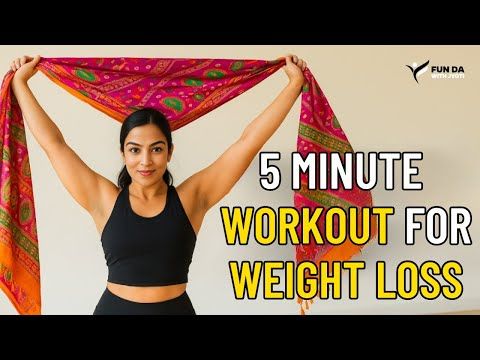
Dr. Jyoti’s free follow-along workouts below fit a morning or after-office slot: a 15-minute chair workout and a 4-minute dupatta toning session.
Sources
- Ekelund U et al. Does physical activity attenuate, or even eliminate, the detrimental association of sitting time with mortality? A harmonised meta-analysis of data from more than 1 million men and women. Lancet. 2016;388(10051):1302-1310.
- Buffey AJ et al. The acute effects of interrupting prolonged sitting time in adults with standing and light-intensity walking on biomarkers of cardiometabolic health in adults: a systematic review and meta-analysis. Sports Med. 2022;52(8):1765-1787.
- Shrestha N et al. Workplace interventions for reducing sitting at work. Cochrane Database Syst Rev. 2018;12(12):CD010912.
- Stamatakis E et al. Association of wearable device-measured vigorous intermittent lifestyle physical activity with mortality. Nat Med. 2022;28(12):2521-2529.
- Jenkins EM et al. Do stair climbing exercise “snacks” improve cardiorespiratory fitness? Appl Physiol Nutr Metab. 2019;44(6):681-684.
- Stutz J et al. Effects of evening exercise on sleep in healthy participants: a systematic review and meta-analysis. Sports Med. 2019;49(2):269-287.
- Anjana RM et al. Physical activity and inactivity patterns in India: results from the ICMR-INDIAB study (Phase-1) [ICMR-INDIAB-5]. Int J Behav Nutr Phys Act. 2014;11:26.
- Bull FC et al. World Health Organization 2020 guidelines on physical activity and sedentary behaviour. Br J Sports Med. 2020.
- Jakicic JM et al. Association between bout duration of physical activity and health: systematic review. Med Sci Sports Exerc. 2019;51(6):1213-1219.
- Mailey EL et al. Physical activity barriers and facilitators among working mothers and fathers. BMC Public Health. 2014;14:657.
- Watson NF et al. Recommended amount of sleep for a healthy adult: a joint consensus statement of the American Academy of Sleep Medicine and Sleep Research Society. Sleep. 2015;38(6):843-4.
- NHS. Neck pain (reviewed 27 April 2023).
How we write our guides: read our editorial and evidence policy.