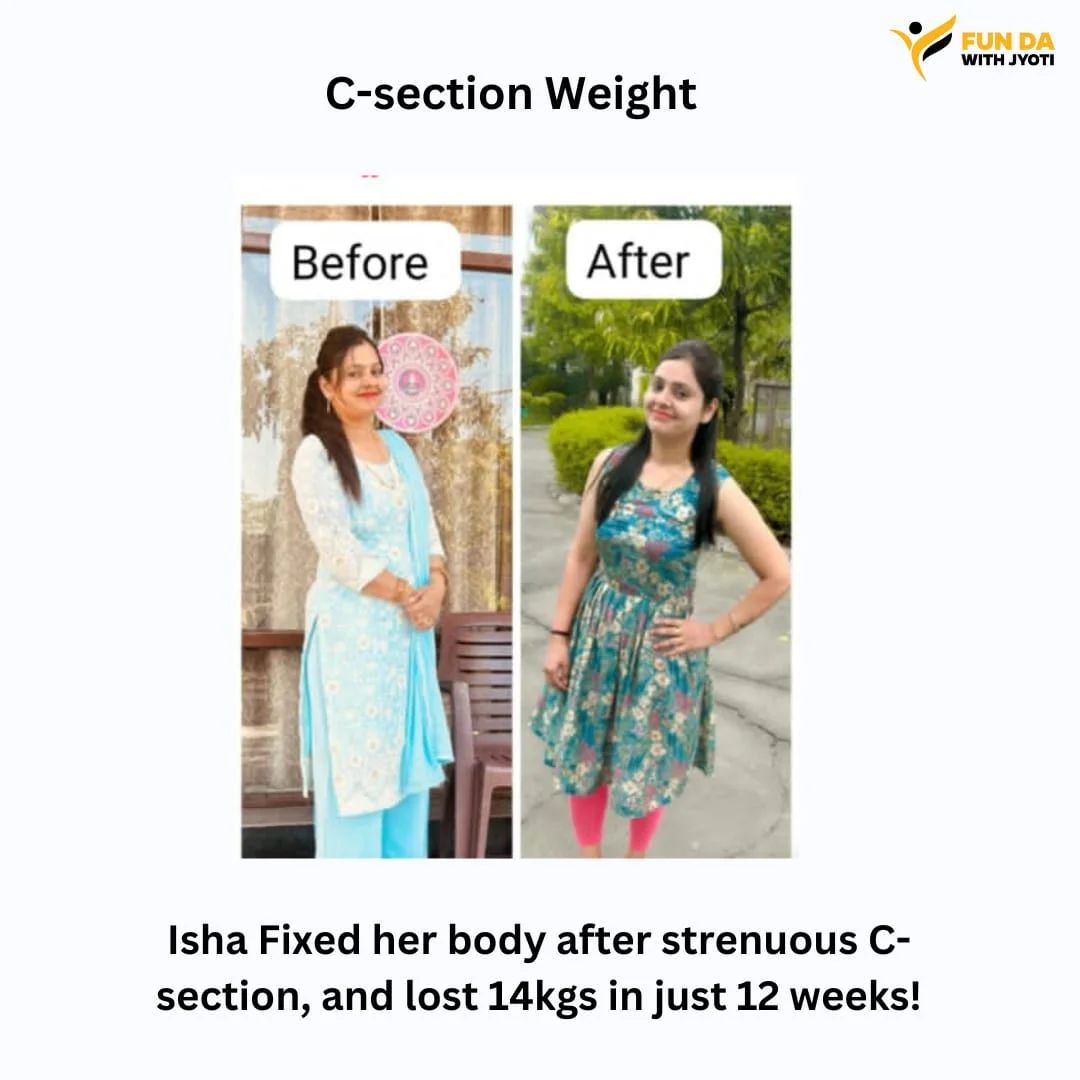
First, give your body time to heal
"C-section ke baad pet kaise kam karein?" is a question we hear from new mothers every week. A caesarean is major tummy surgery, so the plan for weight loss is different from after a normal delivery. Your first job is healing, not burning calories.
The NHS says most women can go home 1 or 2 days after a caesarean. In those first weeks:
- Do stay mobile with gentle activity, such as a short daily walk, to lower the risk of blood clots.
- Don't lift anything heavier than your baby, drive or start workouts until you can do them without discomfort, which may not be for 6 weeks or so.
- Ask your doctor or midwife before you restart exercise. ACOG also advises women who had a caesarean birth to check with their doctor first.
Get medical help straight away if you have severe pain, heavy bleeding, a red, swollen or leaking wound, a cough or breathlessness, or pain and swelling in your lower leg.
Why the tummy looks different after a caesarean
A rounded lower tummy after a C-section is usually a mix of several things:
- Stored fat from pregnancy, which comes down when your overall body fat comes down.
- Stretched skin and swelling around the scar, which take months to settle.
- Separated tummy muscles (diastasis recti), which often improve by about 8 weeks after birth. If a gap is still clearly visible after that, ask your doctor.
- A weak deep core and pelvic floor, which make the tummy push forward.
This is why hundreds of crunches don't flatten a post-C-section tummy. They don't burn the fat on top, and they strain muscles that are still knitting back together.
A stage-by-stage plan
Weeks 0–6: heal and walk
- Short, easy walks at home or outside, a little longer each day.
- Deep belly breathing: breathe in through your nose and let your ribs widen, then breathe out slowly.
- Gentle pelvic floor squeezes, if your doctor or midwife has shown you how and they don't hurt.
- Support your scar with a hand or a pillow when you cough, laugh or get out of bed.
After your postnatal check (around 6–8 weeks): rebuild the core
Once your doctor clears you, build the foundation before you add intensity. Spend two to four weeks on gentle core and posture work: heel slides, pelvic tilts, wall push-ups, and sit-to-stand from a chair. Stop any move that makes your scar pull, your tummy dome or bulge, or causes leaking.
Then: cardio and strength, built up gradually
ACOG suggests that after having a baby you work towards at least 150 minutes of moderate aerobic activity a week, for example 30 minutes on 5 days, or even three 10-minute sessions a day. Start with walking and low-impact dance moves, then add strength work with a chair and water bottles twice a week. Jumping, running and full planks come last, when your core and pelvic floor feel strong.
Eating for weight loss while breastfeeding
The NHS says you don't need a special diet while breastfeeding, just a healthy, varied one. In Indian homes that means:
- Dal, paneer, curd, eggs, chana or another protein at every meal, which helps healing and keeps you full.
- Plenty of sabzi, fruit and fibre, including whole grains, which also help with constipation after surgery.
- Roti and rice in sensible portions, not cut out completely.
- Plenty of water beside you while you feed.
- Go easy on heavy ghee-laden sweets and fried snacks. Traditional postpartum foods are fine in moderation, but they add up quickly.
Avoid crash diets and skipping meals. Slow, steady weight loss is kinder to your energy, your mood and your milk supply.
Fitting it around a baby
- Use 10-minute blocks: a walk with the pram, a short dance session while the baby naps.
- Feed your baby or express before a workout so you are comfortable.
- Sleep when you can. Tiredness makes cravings and skipped workouts far more likely.
- Measure your waist once a month rather than weighing yourself daily.
For the full picture of exercise after any kind of birth, read our postpartum fitness guide. When you are ready to work on the tummy, the belly fat guide explains what actually works.
How FunDa helps new mothers
Dr. Jyoti Srivastava created FunDa (Fun + Dance) after her own weight-loss journey as a new mother. Classes are live on Zoom, women-only and done at home with ghar ki cheezein, so they fit around a baby's routine. Our team starts post-C-section members on gentle, low-impact moves and builds up slowly. We coach fitness habits; we don't diagnose or treat medical conditions, so always follow your doctor's advice about your recovery, and results vary from person to person.